
Your deck may still look fine at first glance, but small issues often start quietly. A loose board, a soft spot under your foot, or a railing that doesn’t feel firm—these are early signs that something needs attention.
The real confusion starts here:
Should you fix the problem or replace the entire deck?
Making the right choice depends on the severity of the damage, the deck’s age, and whether the underlying structure is still strong. Understanding this clearly can save you from repeated repairs or unsafe conditions.
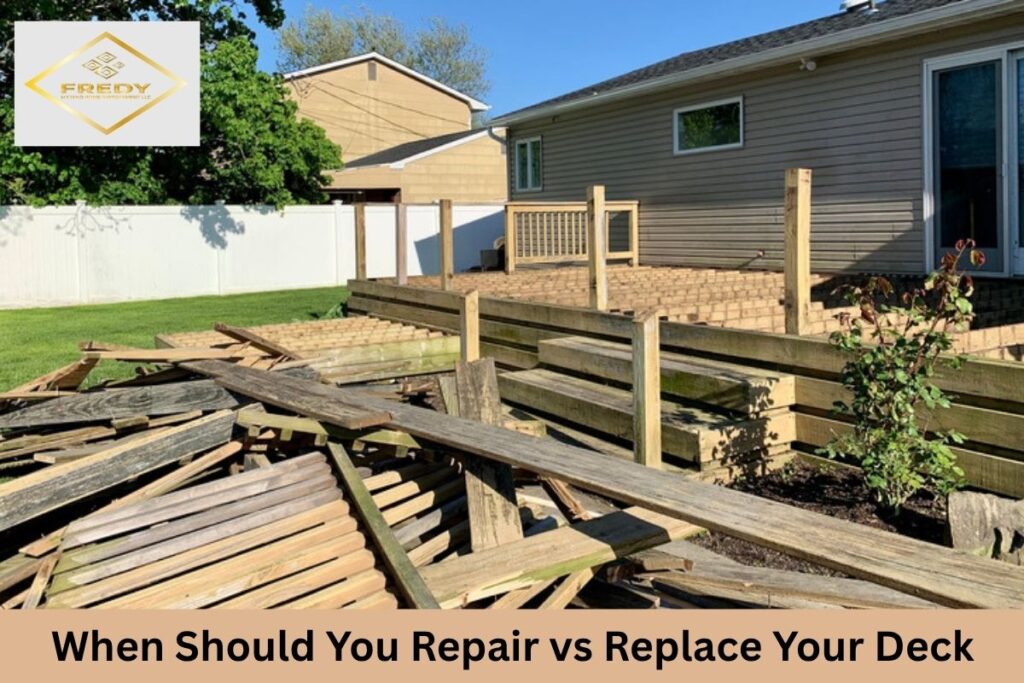
Why Decks Start to Wear Out
Decks remain exposed to outdoor conditions year-round. Over time, this exposure weakens both the surface and the structure.
Common causes include:
- Moisture leading to wood rot
- Sun exposure fades and dries the wood
- Temperature changes cause expansion and contraction
- Insect damage inside the wood
- Regular use loosens fasteners and joints
Even a well-maintained deck will eventually show signs of aging.
When You Should Repair Your Deck
Not every problem requires a full replacement. In many cases, repairs are enough to restore the deck.
Minor Surface Damage
If the damage is only on the surface, repairs usually work well.
This includes:
- Small cracks in boards
- Faded or worn finish
- Light splintering
- Loose screws or nails
These issues don’t affect the overall structure.
Limited Area Damage
If only certain sections are affected, you can fix those parts without replacing the whole deck.
Examples include:
- A few rotten boards
- Isolated insect damage
- Wear in specific spots
This is a practical option when the rest of the deck is still in good shape.
Strong Structural Base
If the frame, posts, and support beams are still solid, repairs are usually enough.
Check for:
- No major movement when walking
- Firm and stable support posts
- No deep cracks in the structure
A strong base means the deck can still last with proper repairs.
When It’s Time to Replace Your Deck
Sometimes repairs won’t solve the problem. In these situations, replacement becomes the safer option.
Widespread Rot or Decay
If large portions of the deck are affected by rot, fixing small sections won’t help.
You may notice:
- Soft or weak wood across multiple areas
- Boards breaking easily
- Damage spreads over time
Structural Weakness
If the structure underneath is damaged, the deck may no longer be safe.
Signs include:
- The deck feels unstable or shaky
- Support beams are cracked or weakened
- Posts are no longer straight
This type of damage should not be ignored.
Repeated Repairs That Don’t Last
If you keep fixing the same issues and they keep returning, repairs may no longer be enough.
Frequent repairs often indicate deeper problems that need a long-term fix.
Old Age of the Deck
Wooden decks don’t last forever.
If your deck is:
- Around 10–15 years old or more
- Showing consistent wear
- Requiring ongoing repairs
Replacement may be the better choice.
Repair vs Replacement: How to Decide
Choosing between repair and replacement becomes easier when you compare the two options.
Repair May Be Enough If:
- Damage is small and limited
- The structure is still stable
- You want a quicker fix
- You’re dealing with surface-level issues
Replacement May Be Better If:
- Damage is spread across the deck
- The structure is weak or unsafe
- Repairs keep repeating
- The deck has reached the end of its lifespan
Looking at the condition honestly helps you avoid spending money on temporary fixes.
Cost Considerations
Cost is often one of the biggest deciding factors.
Repairs:
- Lower upfront cost
- Suitable for small fixes
- May require more work later
Replacement:
- Higher initial cost
- Longer-lasting result
- Fewer recurring issues
While repairs seem cheaper at first, repeated fixes can add up over time.
Safety Risks You Should Not Ignore
A damaged deck can become unsafe if not addressed.
Watch for these warning signs:
- Loose or wobbly railings
- Boards shifting under weight
- Nails or screws sticking out
- Soft spots in the wood
- Visible gaps or movement in the structure
If your deck doesn’t feel stable, it’s better to act before the problem gets worse.
How to Extend the Life of Your Deck
Proper care can help your deck last longer, whether you repair it or replace it.
- Clean the deck regularly
- Apply sealant or stain when needed
- Fix small issues early
- Check for moisture buildup
- Inspect the structure from time to time
Regular maintenance helps reduce long-term damage.
Should You Handle It Yourself or Get It Checked?
Some small repairs can be done without outside help, but not all issues are simple.
You can handle it yourself if:
- The damage is minor
- Only a few boards need fixing
- The structure feels stable
You should consider getting it checked if:
- The deck feels unstable
- Damage is spreading
- You’re unsure about the condition underneath
Homeowners dealing with deck issues often turn to services like these for a clear assessment and to decide whether repair or replacement is the right step.
Final Thoughts
Knowing when to repair or replace your deck comes down to its condition, safety, and long-term value.
Small problems can often be fixed, but larger issues require more careful decision-making. Paying attention to early signs and acting at the right time can help you avoid bigger repairs later.
If your deck is showing signs of wear or doesn’t feel stable anymore, it may be time to take a closer look and decide the next step before the damage spreads further.
H2: FAQs
If the structure is weak, damage is widespread, or the deck feels unsafe, replacement may be necessary.
Yes, if the damage is limited and the rest of the structure is still strong.
Most wooden decks last around 10–15 years, depending on maintenance and weather exposure.
Minor damage may not be risky, but anything affecting stability should be checked.
The condition of the structure is the most important factor. A weak structure usually means replacement is the better option.