
A backyard deck can be one of the most enjoyable parts of any home. It’s where families gather for weekend barbecues, friends relax on summer evenings, and homeowners unwind after long workdays. However, just like any outdoor structure, decks face constant exposure to weather, moisture, sunlight, and daily wear. Over time, boards loosen, railings weaken, and structural elements may start to fail. That’s why understanding the best practices for strong and safe deck repairs is essential.
Many homeowners delay deck repairs because the damage seems minor. Yet small issues often grow into serious safety risks if ignored. A loose board today could become a hazardous collapse tomorrow. The good news is that with the right approach and help from experienced deck repair contractors when needed, you can restore your deck’s strength, appearance, and safety.
In this complete guide, you’ll discover practical strategies to inspect, repair, and maintain your deck properly. We’ll walk through professional tips, safety practices, and expert insights used by top deck repair pros across the U.S. Whether you’re considering DIY fixes or searching for deck repair services, this guide will help you make informed decisions that protect your home and your family.
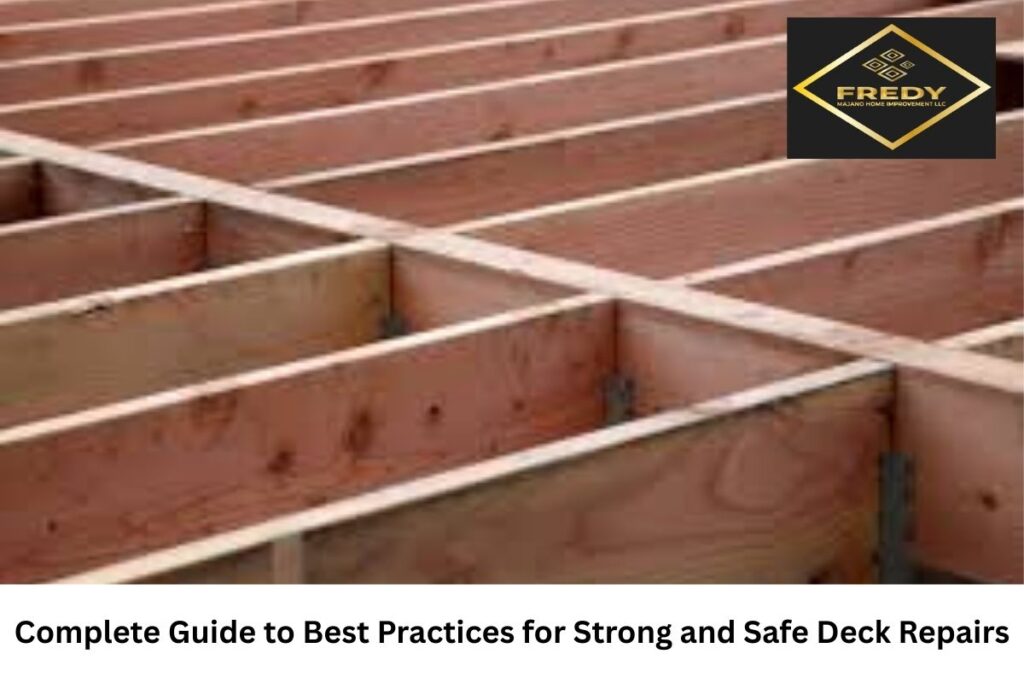
Why Deck Repairs Matter More Than You Think
Many homeowners assume that deck damage is purely cosmetic. In reality, most issues start below the surface. Moisture can weaken support beams, fasteners may rust, and wood rot can silently spread through structural boards. As a result, ignoring early warning signs often leads to expensive rebuilds later.
Regular repairs help extend the life of your deck while preventing safety hazards. According to industry professionals, proactive maintenance can add 10–15 years to a deck’s lifespan. That means timely repairs are not just about appearance; they’re about protecting your investment.
Additionally, professional inspections from deck repair companies often uncover hidden problems homeowners miss. For example:
- Rot beneath surface boards
- Loose or corroded fasteners
- Unstable railings or stairs
- Water damage around posts
- Structural beam weakness
By addressing these issues early, you avoid larger structural repairs down the road.
Signs Your Deck Needs Immediate Attention
Before starting any repairs, you need to identify the warning signs of damage. Some issues are easy to spot, while others require a closer inspection. Either way, recognizing these indicators helps you decide when to call professional deck repair experts.
Common warning signs include both structural and visual clues.
Watch for these common deck problems:
- Soft or spongy wood boards
- Wobbly railings or stairs
- Rusted or loose nails and screws
- Cracks in wood planks
- Fading or peeling deck finish
- Mold, mildew, or wood rot
- Water pooling after rain
If you notice several of these issues, searching for deck repair near me can connect you with experienced specialists who can quickly evaluate the damage.
In many cases, what appears to be a small surface crack may actually indicate more serious structural damage. Therefore, it’s always smart to get a professional opinion before attempting major repairs.
Essential Tools and Materials for Deck Repairs
Whether you’re handling minor fixes yourself or supervising a contractor, understanding the tools involved in deck repair can help you plan better. Most repairs rely on simple carpentry tools combined with durable outdoor materials.
Professional deck repair contractors often recommend high-quality materials designed specifically for outdoor structures.
Common deck repair tools include:
- Power drill and impact driver
- Circular saw, or miter saw
- Pry bar for removing damaged boards
- Measuring tape and carpenter’s level
- Hammer and deck screws
- Safety gloves and goggles
Meanwhile, the materials used in repairs should be strong enough to handle weather exposure.
Popular repair materials include:
- Pressure-treated lumber
- Composite deck boards
- Galvanized or stainless-steel fasteners
- Waterproof wood sealants
- Structural brackets and joist hangers
Using the right materials ensures repairs last longer and maintain structural safety.
Step-by-Step Approach to Safe Deck Repairs
Professional contractors follow a clear process when repairing decks. While the steps may vary depending on damage, the overall workflow remains consistent.
First, the deck undergoes a thorough inspection. Contractors check joists, beams, posts, and surface boards for signs of rot or instability. After identifying problem areas, they carefully remove damaged materials.
The repair process often includes the following steps:
- Inspect the entire structure for hidden damage
- Remove damaged boards or fasteners
- Replace weakened joists or support beams
- Install new boards with corrosion-resistant screws
- Reinforce railings and stairs
- Apply protective sealant or stain
By following this systematic approach, professional deck repair specialists ensure every part of the structure remains stable and secure.
DIY Repairs vs Hiring Professional Deck Experts
Some minor deck repairs are manageable for homeowners. Tightening loose screws or replacing a single board may not require professional help. However, structural issues demand expert attention.
For example, if the deck frame, support posts, or stair structure is compromised, hiring experienced local deck contractors becomes the safest option.
DIY repairs might work for:
- Replacing a small number of boards
- Cleaning and sealing the deck
- Tightening railings
- Fixing minor surface cracks
However, professionals should handle larger problems.
Hire professionals when you notice:
- Structural beam damage
- Severe wood rot
- Unstable deck foundations
- Extensive railing failures
- Major stair damage
If you’re unsure where to start, trusted experts like Fredy Majano Contractors offer reliable guidance and skilled artistry. Their dedicated deck repair services help homeowners safely and efficiently restore their outdoor spaces.
Working with experienced contractors ensures your repairs meet safety codes and last for years.
Preventive Maintenance: The Secret to Long-Lasting Decks
The best repair strategy is preventing damage before it starts. Preventive maintenance helps you avoid costly structural repairs while keeping your deck looking great.
Experts recommend inspecting your deck at least once a year, ideally during spring or early summer.
Regular maintenance should include:
- Cleaning debris and dirt buildup
- Washing the deck with mild detergent
- Checking for loose fasteners
- Inspecting railings and stairs
- Resealing wood surfaces every 2–3 years
- Removing mold or mildew immediately
Additionally, trimming nearby plants and trees reduces moisture buildup around the deck.
Consistent upkeep significantly reduces the need for major repairs and keeps your deck safe for everyday use.
Choosing the Right Deck Repair Professionals
Finding reliable contractors can feel overwhelming, especially when you search online for “deck repair near me” and get dozens of results. Not all contractors offer the same level of experience or quality.
To choose the best deck contractors, consider several important factors.
Look for contractors who:
- Have verified licenses and insurance
- Provide clear written estimates
- Show before-and-after project photos
- Offer warranties for repair work
- Have strong customer reviews
- Specializes in outdoor structures
Trusted deck repair companies will also conduct a detailed inspection before recommending repairs. This ensures you only pay for truly necessary work.
Taking time to vet contractors helps ensure your deck repair project runs smoothly.
Cost Factors in Professional Deck Repairs
Deck repair costs vary depending on several factors, including damage severity, deck size, and materials used. While minor repairs may cost a few hundred dollars, larger structural repairs can require a bigger investment.
Common cost factors include:
- Extent of wood rot or structural damage
- Replacement materials (wood vs composite)
- Labor costs from top-deck repair pros
- Railing or stair repairs
- Deck staining and sealing
Despite the cost, professional repairs often save money in the long run. Ignoring damage can lead to full deck replacement, which is far more expensive.
Investing in timely professional deck repair ensures your deck remains safe, attractive, and durable for years.
Final Thoughts
A well-maintained deck adds beauty, functionality, and value to your home. However, keeping it strong and safe requires consistent attention. From spotting early warning signs to choosing reliable contractors, every step plays a role in preserving your outdoor space.
Fortunately, deck repairs don’t have to be overwhelming. By following proven best practices and working with experienced deck repair contractors, homeowners can restore damaged decks efficiently and safely.
Remember, small repairs today prevent major rebuilds tomorrow. So whether you’re tightening a few boards or hiring local deck contractors for structural fixes, taking action now protects both your home and your loved ones.
FAQs
How often should I inspect my deck for repairs?
Experts recommend inspecting your deck at least once a year. However, checking it after extreme weather conditions is also a good idea.
Can I repair a deck myself?
Yes, minor repairs like tightening screws or replacing a few boards are DIY-friendly. However, structural issues should always be handled by a professional, friendly contractor.
How long do deck repairs usually take?
Small repairs may take a few hours, while larger projects can take 1–3 days, depending on the severity of the damage.
What is the average cost of deck repair?
Typical deck repairs range from $300 to $3,000, depending on materials, labor, and the extent of structural damage.
When should I replace my deck rather than repair it?
If more than 50% of the deck structure is damaged, replacement may be more cost-effective than repeated repairs.