
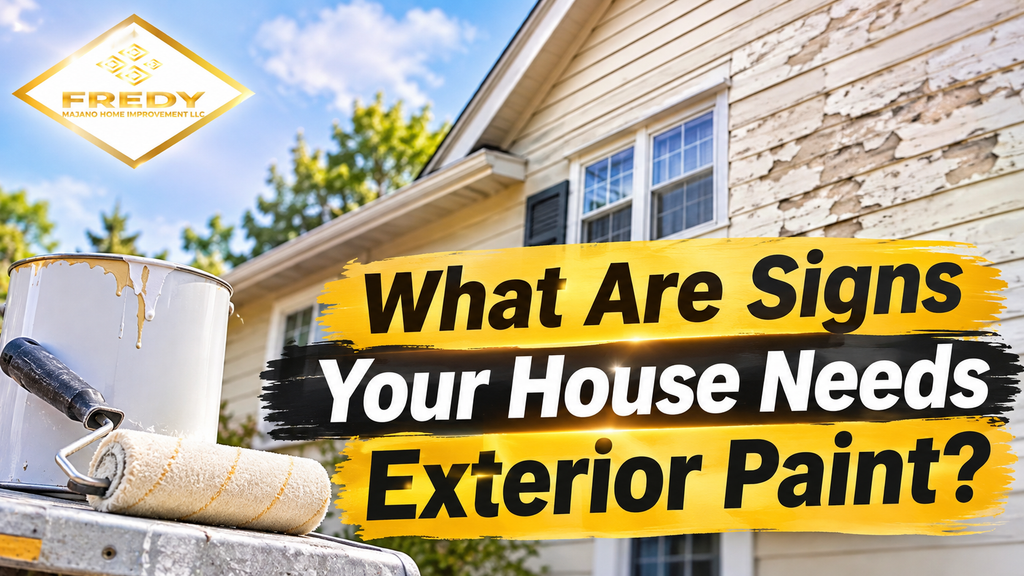
Exterior paint does two jobs at once. It defines how a home looks from the street, and it forms the first barrier against rain, sun, and temperature swings. When that barrier fails, moisture finds its way behind the siding and into the wood. Most homeowners notice the cosmetic decline first, but the structural damage is usually what matters more. Catching the signs early keeps a painting project from turning into a repair project.
We will look at the specific signs that indicate exterior paint is failing, what each one means, and how to tell the difference between surface wear and damage that needs attention first.
Peeling, Cracking, or Bubbling Paint
This is the most obvious sign and the most urgent one. Paint that is peeling, cracking, or bubbling has stopped adhering to the surface.
What Bubbling Indicates
Blisters or bubbles in the paint usually mean moisture has already gotten behind it. The paint lifts as water vapor pushes outward. This is not a surface problem. It is a sign that water is entering somewhere and needs to be found.
Where It Starts
Peeling typically begins around windows, doors, and trim where caulk fails first. It spreads from there. Once the outer layer breaks down, the siding underneath is exposed to sun, rain, and insects.
Fading or Discolored Paint
Fading happens slowly enough that homeowners often do not notice until they compare the house to a photo from a few years earlier.
Which Sides Fade First
South- and west-facing walls take the most direct sun and fade faster than the rest of the house. If one side looks noticeably paler than another, UV exposure is breaking down the pigments.
What Fading Actually Means
Fading is not only cosmetic. It signals that the protective layer is weakening. The same UV exposure that fades the color also degrades the paint film, which reduces its ability to shed water.
Chalking or Powdery Residue
Chalking shows up as a fine powder on the surface of the paint. Rub a hand along the siding, and a chalky residue comes off on your fingers.
What Causes Chalking
Chalking is a normal part of paint aging, but excessive chalking means the binder has broken down. UV light degrades the resin that holds the pigment and filler together, and the surface turns powdery.
Why It Matters
Chalky paint no longer protects the surface underneath. It also indicates that the paint is near the end of its service life, even if it still looks like a solid color from a distance.
Moisture Stains, Mold, and Mildew
Dark patches, green streaks, and black spots on siding all point to moisture problems.
Where Growth Appears
Mold and mildew favor shaded areas, north-facing walls, and spots near gutters where water collects. Green algae often appears on walls that stay damp the longest.
What It Signals About the Paint
Modern exterior paints contain mildewcides that resist growth. When mold and mildew take hold and keep coming back after cleaning, the paint has lost that resistance. Repainting with a quality product solves it.
Wood Rot and Soft Spot
Paint protects wood from moisture. When the paint fails, the wood absorbs water, and rot begins.
Where to Check
Press gently on window sills, door frames, fascia boards, and siding close to the ground. Any spot that feels soft, spongy, or crumbles under light pressure has started to rot.
What to Do About It
Rot needs to be repaired or replaced before painting. Paint will not fix rotted wood, and applying it over rot traps moisture and makes the problem worse. This is the one sign that always requires work before the paint goes on.
Cracked or Failing Caulking
Caulking seals the gaps around windows, doors, and trim. When it fails, water gets behind the siding.
What to Look For
Cracks in the caulk lines, gaps where the sealant has pulled away, and caulk that feels brittle or has shrunk. These are common around window frames and where trim meets siding.
Why It Signals Repainting
Failing caulk usually appears at the same time as failing paint because both age on the same timeline. A proper paint job includes removing old caulk and applying fresh, flexible sealant before painting.
Old Paint With No Clear History
Paint does not last forever, even when it still looks acceptable.
Expected Service Life by Material
Wood siding typically needs repainting every five to ten years. Fiber cement lasts eight to fifteen years. Homes in wet climates often need repainting sooner than homes in dry ones.
Why Preventative Painting Saves Money
A paint job on a sound surface costs far less than a paint job that includes scraping, priming, and repairs. Waiting until the damage is visible means paying for both.
When to Call for an Assessment
Some signs are clearly cosmetic, and some indicate damage underneath. Knowing which is which prevents unnecessary work or delayed repairs.
Signs That Need Immediate Attention
Peeling paint, bubbling, soft wood, and active moisture problems should be addressed before the next wet season. These conditions worsen with every rain.
Signs That Can Wait a Season
Fading, chalking, and mild surface mildew can often be scheduled for the next suitable painting window. That window is usually a stretch of dry weather with moderate temperatures and low humidity.
Final Thoughts
Exterior paint fails in a predictable order. Fading comes first, then chalking, then cracking and peeling, then moisture intrusion and rot. Catching the process early keeps the job in the painting category rather than the repair category. Walk the exterior twice a year, check the caulk lines and window trim, and pay attention to any wall that looks noticeably different from the rest. The cost of a paint job now is far lower than the cost of siding repairs later.
FAQs
1. How often should a house exterior be painted?
Wood siding needs repainting every five to ten years. Fiber cement lasts eight to fifteen years. Homes in wet or humid climates need repainting more often than homes in dry climates. Quality paint and proper prep extend the interval.
2. Can I paint over peeling or bubbling paint?
No. Peeling and bubbling paint must be scraped, sanded, and primed before repainting. Painting over failing paint traps moisture and causes the new layer to fail in the same way. Surface preparation determines how long the new job lasts.
3. What causes paint to bubble on exterior walls?
Moisture behind the paint is the most common cause. Water vapor pushes outward and lifts the paint film. The source of the moisture, often a failed caulk joint or a leak, needs to be found and fixed before repainting.
4. Is chalking paint a problem?
Chalking is a normal part of aging, but heavy chalking means the binder has broken down and the paint no longer protects the surface. It also prevents new paint from adhering properly. The chalky layer needs to be washed off before repainting.
5. What is the best time of year to paint a house exterior?
Late spring and early fall usually offer the best conditions. Temperatures between 50 and 85 degrees Fahrenheit with moderate humidity allow paint to cure properly. Avoid painting in direct hot sun, in high humidity, or when rain is expected within 24 hours.